Restore or Replace? Wood Floor Restoration Advice
A tired-looking wood floor doesn’t necessarily mean it’s time for a new one.
Scratches, fading, dents and worn patches can make an old floor look past its best, but surface wear and structural damage are two very different things. More often than not, there’s far more life left in the timber than its appearance suggests.
So before you start pricing up a replacement, it’s worth finding out whether your floor can be restored.
What determines whether a wood floor can be restored?
The two biggest factors are the condition of the timber and how much of it there is to work with.
Solid wood floors can usually be sanded several times over their lifetime, because there’s plenty of timber above the tongue and groove. We’ve restored floors well over 100 years old, from reclaimed pine in Cotswold farmhouses to herringbone parquet in Georgian townhouses around Cirencester and Bath.
Once the old finish and surface damage are gone, the timber underneath can look like a completely different floor.
What about engineered wood?
Engineered wood is a slightly different story. It has a top layer of real wood bonded to a stable base, usually plywood, so how many times it can be sanded depends on the thickness of that top layer.
If an engineered floor has already been sanded once or twice, it may be close to the limit of what can safely be removed. In that case, replacement may make more sense than restoration.
We’ll always be straight with you about this. If restoring your floor won’t give a result that lasts, we’ll tell you.
What if the floor has structural damage?
Surface wear, fading and even fairly heavy staining are usually cosmetic, and most can be dealt with during restoration.
More serious problems include:
- Rot caused by long-term damp
- Significant movement in the boards
- Problems with the subfloor
- Loose or badly damaged boards
Even then, replacing the whole floor isn’t always necessary. Where possible, we repair or replace individual boards and keep the rest of the original floor, which matters a great deal in a period home where the original timber is part of the character.
How we assess your floor
We start with a free on-site survey rather than trying to judge a floor over the phone. Seeing it in person lets us understand exactly what we’re working with.
We’ll look at:
- The type and thickness of the timber
- Whether it’s been sanded before
- The condition of the existing finish
- Any signs of movement or structural damage
From there, we’ll explain what can realistically be achieved and whether restoration is the right choice.
What does wood floor restoration involve?
Every floor is different, but the process typically follows four stages.
- Preparing the room. We clear and protect the space, including skirting boards, doorways and adjoining rooms, before any work begins.
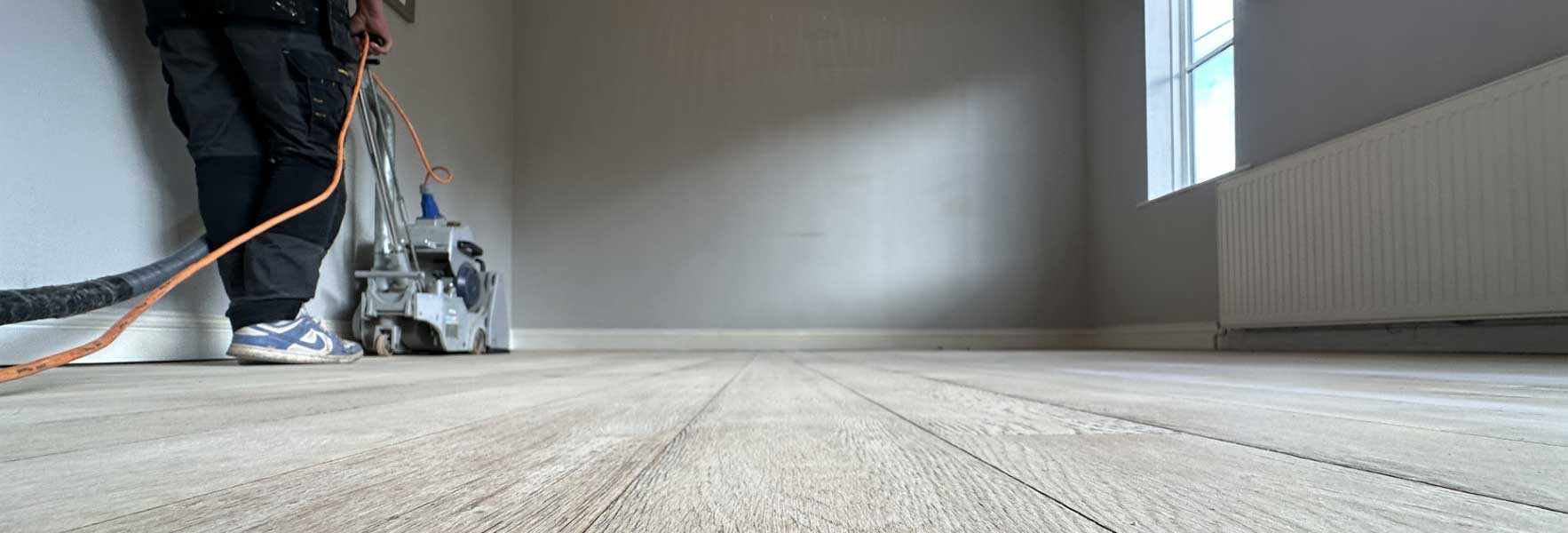
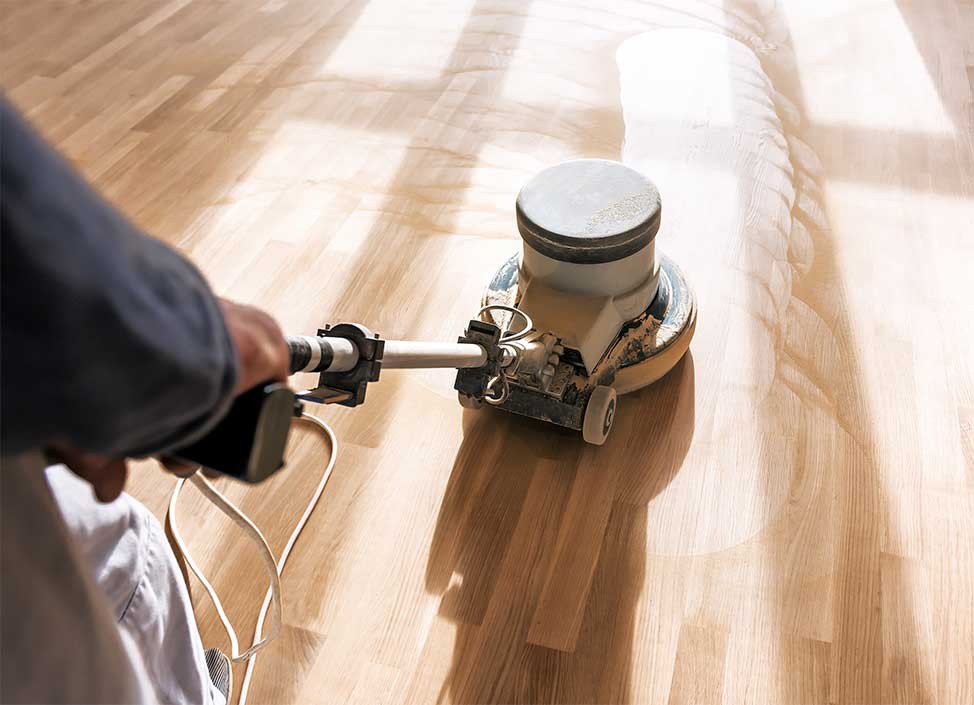
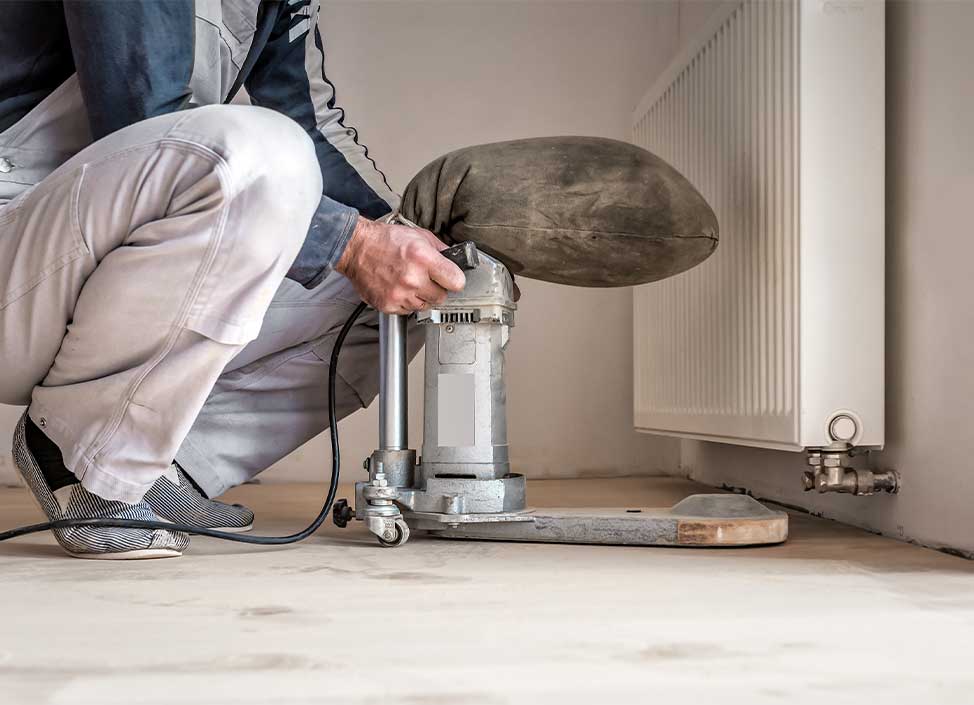
- Dust-controlled sanding. The old finish and worn surface are removed using dust extraction equipment, so the rest of your home stays clean while we work.
- Repairs. Loose or damaged boards are repaired or replaced where needed. Gaps can be filled with a resin mixed with sanding dust from your own floor, so the filler blends in with the surrounding timber.
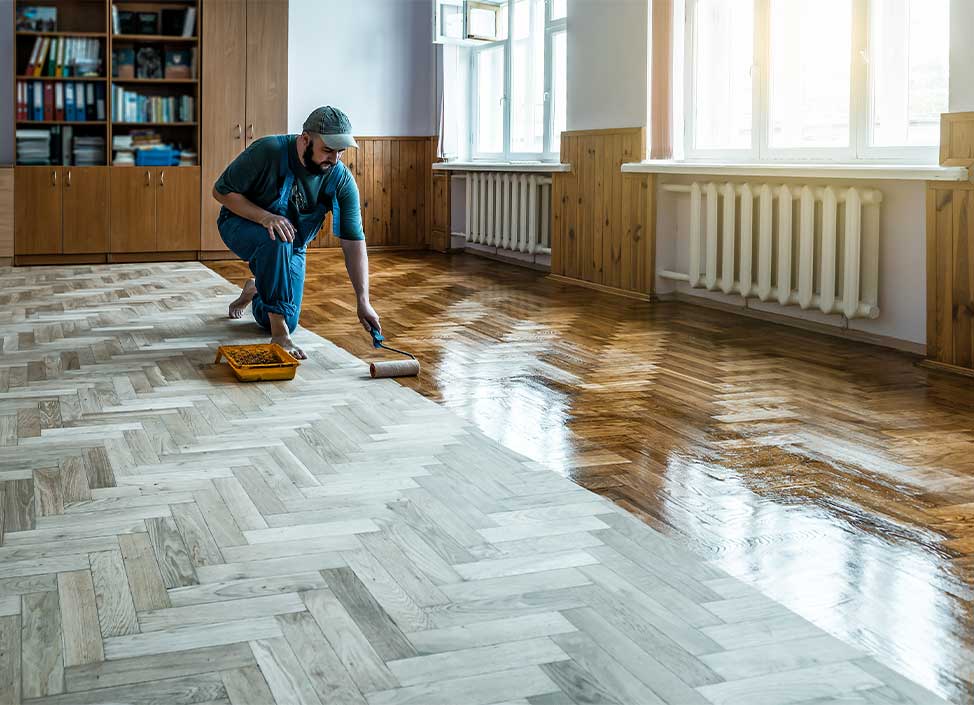
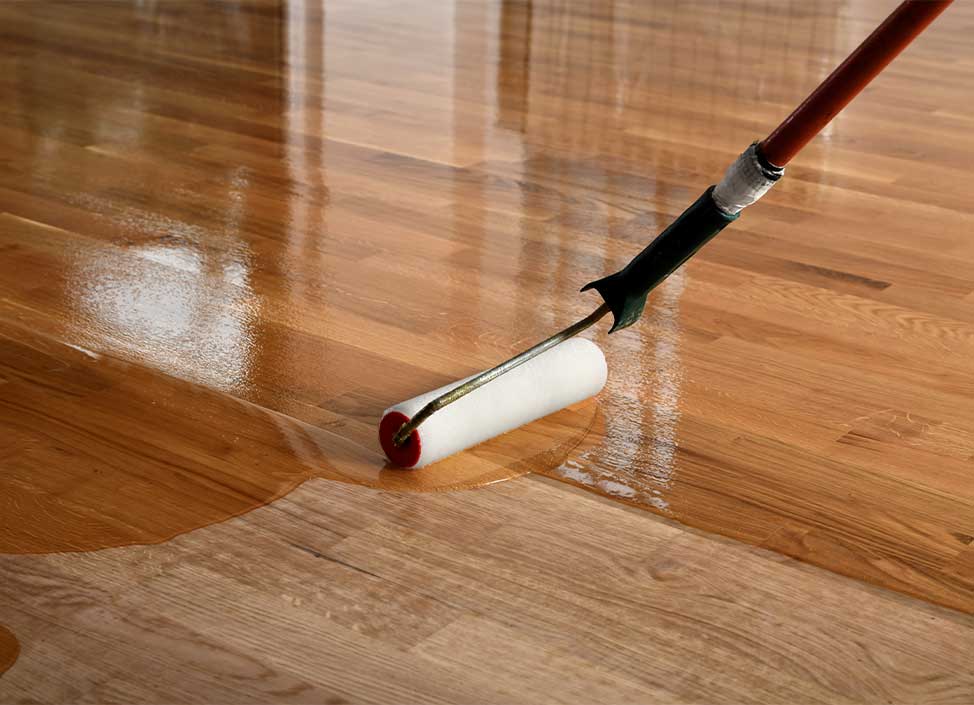
- Finishing. Your chosen finish is applied to protect the timber and give the look you want.
Choosing the right finish
The finish affects how your floor looks, how it feels underfoot and how it wears day to day.
Oil soaks into the grain, bringing out the warmth and character of the timber. It gives a soft, natural, tactile finish, and worn areas can be touched up locally without redoing the whole floor.
Lacquer forms a protective layer on the surface and comes in matt, satin and gloss. It’s a practical choice for busy households, though if it does wear through, the whole area usually needs recoating rather than a spot repair.
Hardwax oil sits between the two. It keeps much of the natural look and feel of an oiled floor while adding extra protection against spills and everyday wear.
The right finish depends on the timber, the room and how you live in it. We’ll talk you through the options before any work starts.
So, should you restore or replace your wood floor?
If your floor looks tired, don’t assume it needs replacing. Many old and heavily worn wood floors can be restored, often for considerably less cost and disruption than taking them up and starting again.
The only way to know for certain is to have the floor properly assessed. We’ll give you an honest recommendation based on the condition of your timber. If restoration is possible, we’ll show you what can be achieved. If replacement really is the better option, we’ll tell you that too.
Wood floor restoration across the Cotswolds and South West
Based in Tetbury, we carry out wood floor restoration across Gloucestershire, the Cotswolds, Wiltshire and Bristol.
If you’re wondering whether your floor can be saved, we’d be happy to take a look. Call us on 01666 330 656 or get in touch to arrange a free on-site survey.