Plenty of people walk into our Tetbury showroom half-expecting the eco flooring to be the soft, fragile stuff at the back. A nice idea, they assume, but not something that will survive a family, a dog and a wet Wednesday in Gloucestershire.
In fact, some of the toughest floors we fit come from our eco range. Take coir: it’s made from the husk of a coconut, which is not a material that gives up easily.
The honest answer to the question is that it depends on which material you choose and where you put it. Nobody lays a delicate fibre in a boot room and then blames the fibre.
We stock five natural fibres. Each behaves differently, so it’s worth knowing them apart before you choose.
Coir is a by-product of a crop that’s already grown for something else. It’s coarse underfoot and genuinely hard-wearing, which is why it turns up so often in entrance halls, porches and on stairs. If your front door opens straight onto the floor in question, coir is usually the first thing we’d recommend.
Sisal is cut from the leaves of the agave plant, which regrows without replanting. It’s textured, strong and takes colour well, so it suits spaces where you want something durable that doesn’t look purely functional: hallways, landings, studies.
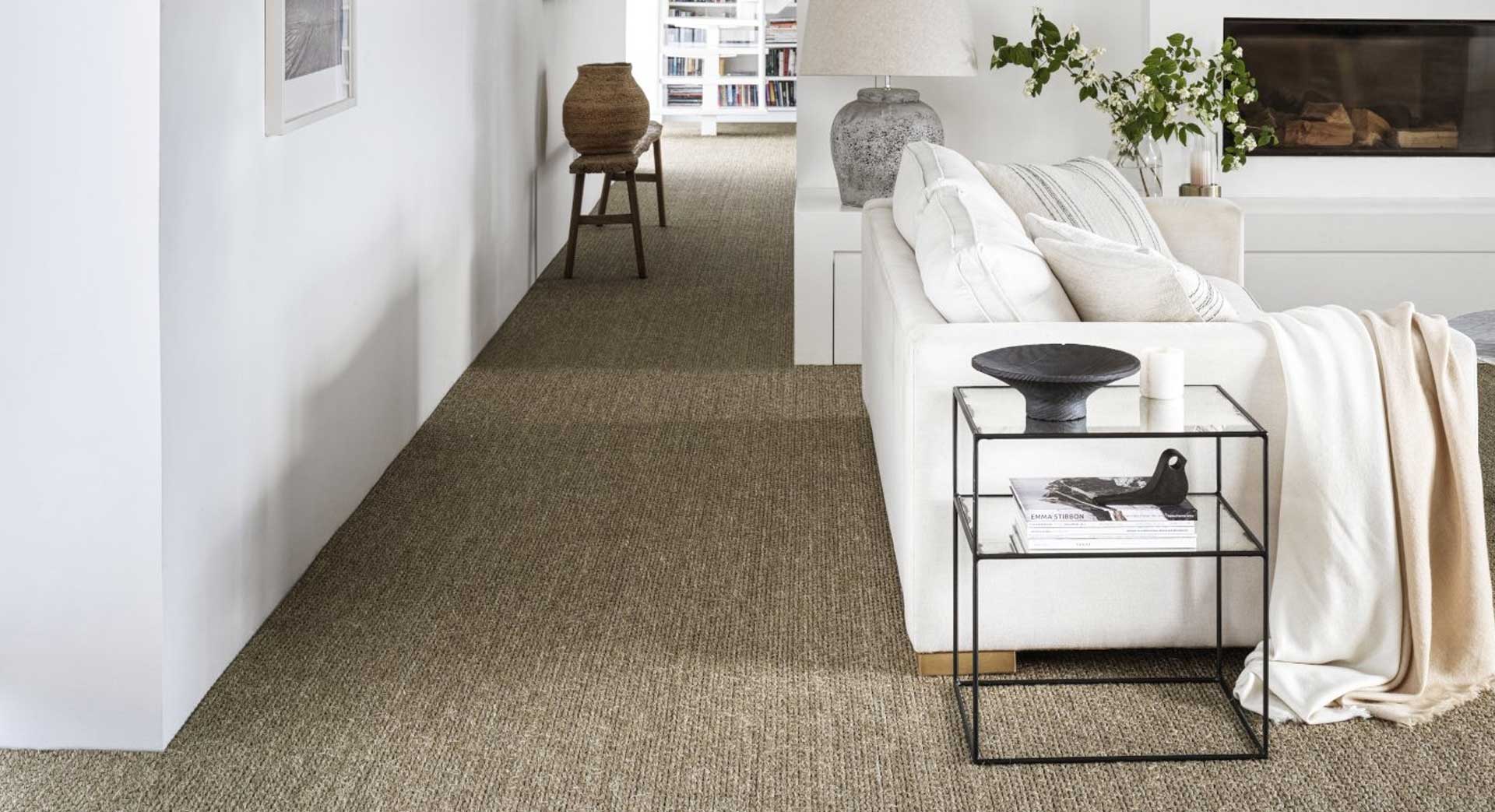
Seagrass is grown in coastal paddy fields flooded with seawater. The fibre is naturally smooth and slightly waxy, which makes it hard to dye but unusually resistant to marking. It gives a clean, flat, contemporary finish and holds its looks over time. It’s a good choice for open-plan spaces and rooms where you want the floor to sit quietly in the background.
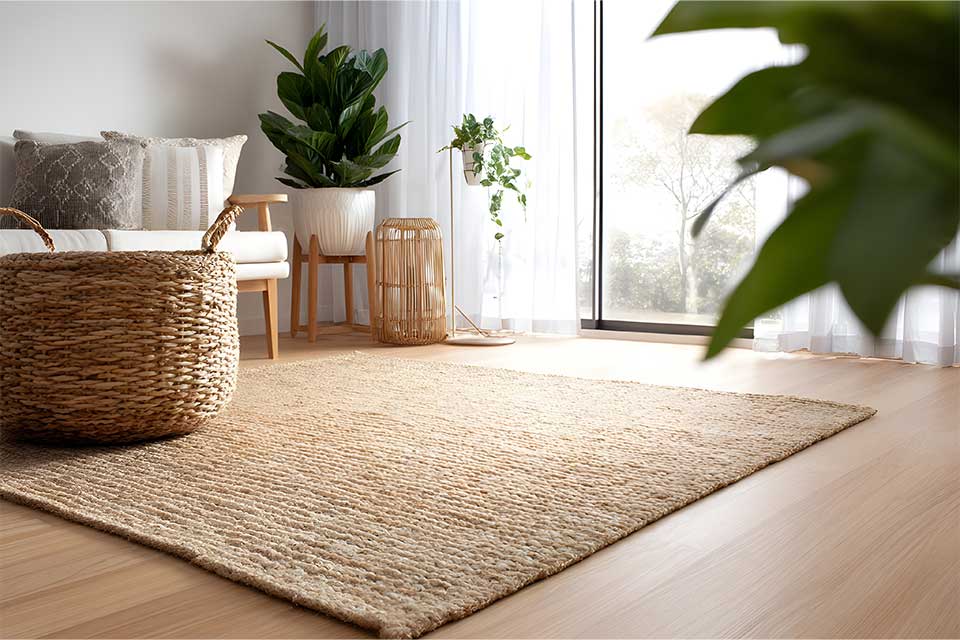
Jute is the softest of the traditional fibres. It’s spun from a fast-growing plant that’s harvested annually, and the trade-off for that softness is that it isn’t made for heavy traffic. Think bedrooms, snugs, or a first-floor sitting room, anywhere you’re often barefoot.
Tencel is the one that surprises people. It’s a fibre made from wood pulp, produced in a closed-loop process where the solvent used to break the pulp down is captured and reused rather than discharged. The result is smooth and soft underfoot yet strong enough for high-traffic areas, which makes it the exception to the rule the rest of this list follows.
Coir, sisal, seagrass and jute are plant fibres rather than petroleum-based synthetics. Tencel is manufactured, but from wood rather than oil, and like the others it’s biodegradable at the end of its life. That’s what “eco” means here. It isn’t a badge; it’s simply what the material is made of and what happens to it afterwards.
Here’s the practical part. Two households can choose the same flooring and have completely different experiences of it, because one laid it in a hallway and the other in a bedroom.
A hallway takes every bit of grit that comes in from outside, and it takes it along the same narrow path every day. That’s an abrasion problem, and it calls for coir or sisal. All natural fibres prefer to stay dry, so in an entrance that sees muddy boots and wet dogs, a good doormat at the threshold will add years to the floor.
A living room sounds busier than it is. People sit in it, and most of the wear happens along one route between the door and the sofa. Sisal works well here, and so does jute if the room is more evenings-and-slippers than children-and-football.
A bedroom is where jute earns its place: low traffic, bare feet, comfort ahead of toughness.
Stairs are a case of their own. The wear lands on the nosing of each tread rather than spreading across the floor, so we’d steer you towards the hard-wearing end whatever you’ve chosen for the rooms above and below.
Tencel answers the awkward middle case: the room that’s busy but that you also want to feel good underfoot. A family landing, a staircase you walk barefoot, or a living room that genuinely does take the traffic.

Durability can be measured. Whether you enjoy standing on something can’t.
Sisal and seagrass have real texture. Some people love that and specifically want it; others try it barefoot and know immediately it’s not for them. Jute and Tencel sit at the softer end, and coir is coarser than all of them.
This is the one part of the decision you can’t make from a photograph or a spec sheet. Take samples home, lay them in the actual room, in the actual light, and walk on them without shoes. It settles most debates in about a minute.
We work with established manufacturers who specialise in natural fibre flooring, and we handle everything ourselves, from consultation and measuring to the quote and the fitting by our own team. Even the hardest-wearing fibre will wear unevenly and look wrong if it’s been badly stretched or joined.
Choosing a natural floor doesn’t mean accepting a shorter life. It means paying attention to which fibre goes where: coir and sisal where the traffic is, jute where comfort matters, seagrass where you want a clean, calm finish, and Tencel where you want both toughness and softness.
Explore our Eco Flooring for the full range. Or if you’d rather talk your rooms through with someone, get in touch with the team or call the Tetbury showroom on 01666 330 656.